If you have melasma, you probably know the pattern. You find something that works, perhaps a cream, a peel or a course of treatments, and the patches start to fade. Then a few months later, often after a summer, a holiday or a stressful stretch, they are back. Sometimes darker than before.
Why does melasma keep coming back? It is one of the questions we hear most at Medcura, our skin clinic in Harrow, and the answer is rarely that you did something wrong. Melasma returns because of the way it works. Once you understand what keeps it active, it becomes far easier to manage.
Why does melasma keep coming back after treatment?
Melasma returns because treatment can lighten the pigment already in the skin, but it cannot remove the signals that switch pigment cells on. Sunlight, heat, hormones and inflammation remain part of daily life, and the cells in melasma-prone skin respond to them strongly. This is why melasma is described as a long-term, relapsing condition that is managed rather than fixed once.
Melanin, the pigment that colours the skin, is made by cells called melanocytes. In melasma those cells are more reactive than the skin around them, and some of the pigment sits deeper than a surface treatment reaches. Lightening the top layer without calming that activity leaves the cells free to produce more. It also explains why one patch fades quickly while another barely moves.
What is happening in your skin
Melanin, the pigment that gives skin its colour, is made by cells called melanocytes. In melasma, the melanocytes in affected areas are more reactive than those in the surrounding skin. They respond strongly to signals that normal skin would largely ignore. Research also points to changes in the deeper layer of the skin, including small blood vessels and the supporting structure beneath the surface, that keep sending those signals.
This has two practical consequences:
- Lightening the surface is not the same as calming the cells underneath. If a treatment only removes pigment, the cells can simply make more.
- Some melasma sits deeper in the skin. Deeper pigment fades more slowly, which is why some patches respond quickly while others barely move.
What Triggers Melasma to Come Back?
Melasma rarely has a single cause. Sunlight, heat, hormones and irritation often overlap, which is why one careful week does not always hold your results. Knowing which melasma triggers affect your skin makes them much easier to manage.
Why does melasma keep coming back every summer?
Ultraviolet light is the best-known cause, and a short spell without protection can undo weeks of progress. Visible light, the ordinary daylight we see, also stimulates pigment, particularly in medium and deeper skin tones. Most sunscreens are designed around UV, which is why tinted formulas are usually recommended for melasma. Daylight passes through car and office windows and through cloud, so protection matters in a UK winter as much as it does in July.
Heat
Many patients notice their melasma darkening after hot yoga, saunas, steam rooms or long sessions at the hob, even when they have been careful with sunscreen. Heat appears to stimulate pigment activity in melasma-prone skin. It is the reason we do not routinely use laser or heat-based treatments for melasma at Medcura.
Hormones and melasma after pregnancy
Melasma is far more common in women. It often starts or worsens during pregnancy, which is why it is sometimes called the mask of pregnancy, and it is also linked to the combined contraceptive pill and HRT. Melasma after pregnancy may fade over the following months, but for many women it stays and can return with later pregnancies. Please do not change your contraception or HRT because of pigmentation. Those decisions belong with your prescriber.
Irritation and inflammation
Harsh scrubs, strong acids used too often, heavily fragranced products and aggressive treatments can all encourage extra pigment. In skin types III and IV, which includes many people of South Asian, Middle Eastern and Mediterranean heritage, inflammation can also leave post-inflammatory hyperpigmentation on top of the melasma, a separate problem that a pigmentation treatment plan addresses differently. Melasma in Asian skin is one of our specialisms, and gentleness is the principle we return to most.
Family history
Melasma often runs in families. You cannot change this, but if your mother or sister has it, your own skin may be more prone to it and worth protecting early.
Why some treatments make melasma worse
This is the part that frustrates people most. Treatments that work well for sun spots or freckles can backfire on melasma.
- Strong peels and lasers: They can clear pigment quickly, but the heat and inflammation they cause can trigger rebound pigmentation, where the patches return darker than before. The risk is higher in medium and darker skin.
- Lightening creams bought online: Some skin-lightening products sold online contain ingredients that are banned in UK cosmetics, such as mercury or high-strength steroids, which can cause lasting damage to the skin. If a product promises fast whitening, treat it with suspicion.
- Stopping when the skin looks clear: This is the most common reason of all. The patches fade, the routine slips, sunscreen becomes occasional, and a few months later the melasma is back.
How to stop melasma coming back
No single treatment can promise that melasma will never return. What works is treating it carefully, keeping up daily protection and planning for maintenance from the start.
Treat the skin in layers
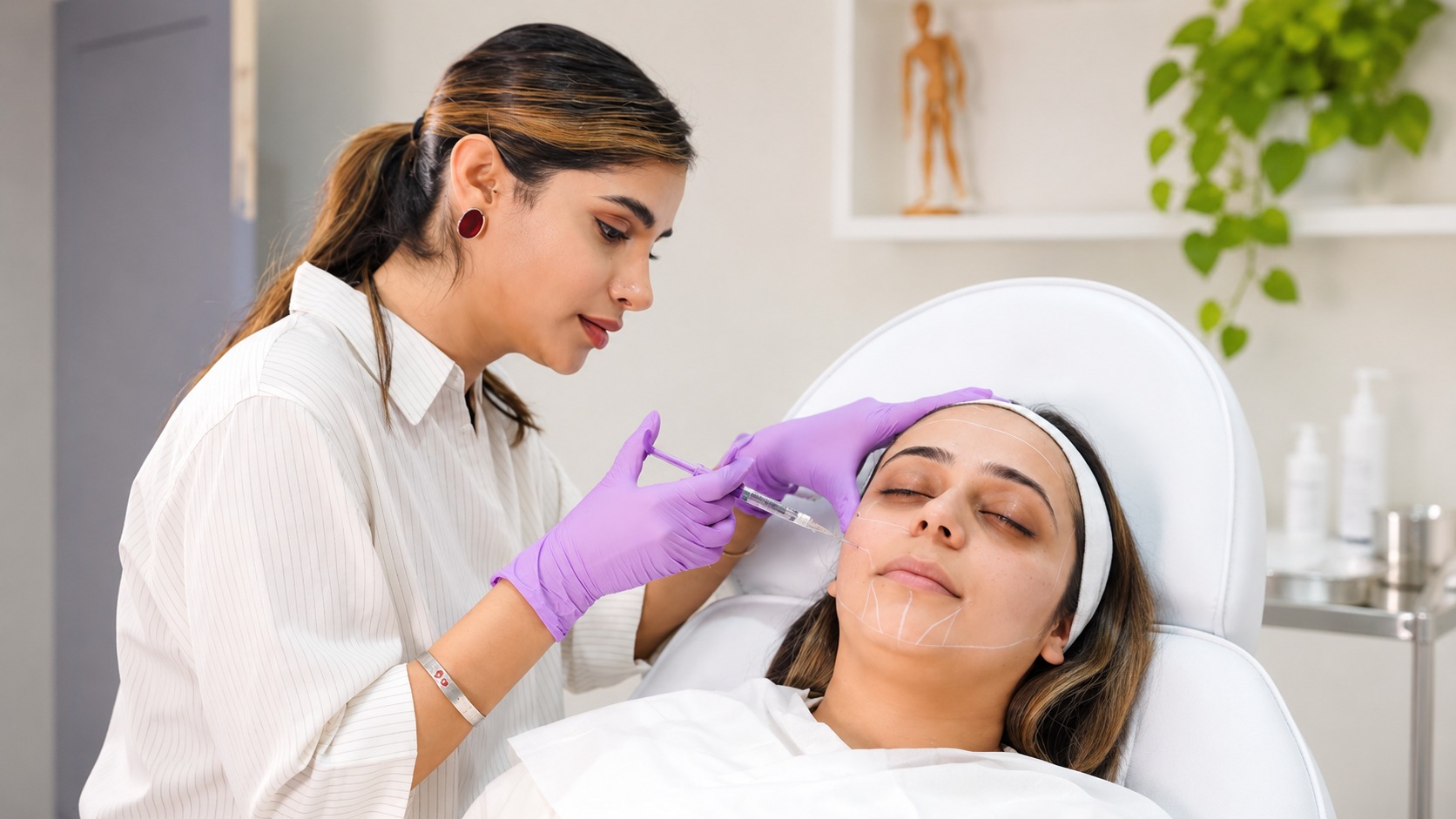
The melasma clearing programme at Medcura is built around four sessions. Each is tailored to your skin and pigment response, and the combination may include microneedling, injectable therapies, skin boosters and controlled TCA peels. Spreading the work across several approaches, rather than relying on one strong treatment, is intended to keep inflammation low in skin that reacts easily. Downtime is typically three to seven days.
Support the skin between sessions
The programme includes a skincare regime provided to help regulate pigmentation, support treatment results and maintain progress between appointments. Alongside it, a morning vitamin C serum under sunscreen adds antioxidant protection. Keep the routine short. A few well-chosen products used every day tend to irritate less than a crowded shelf.
Make tinted SPF non-negotiable
Daily SPF is part of the treatment, and the programme is not suitable if you cannot commit to it. Choose a tinted SPF 50 sunscreen, apply it every morning all year and reapply every two hours outdoors. We stock Obagi Sun Shield SPF50 in a cool tint for pink or beige undertones and a warm tint for golden or olive undertones, both described by the manufacturer as defending against HEV and blue light. A wide-brimmed hat and shade at midday help too.
Look at the wider picture
Melasma is not only a surface problem, so the programme also covers nutritional guidance, a supplement course, a personalised diet guide and an aftercare plan. The aim is that you understand your own triggers and know what to watch for.
Plan for maintenance
When patients ask “can melasma be cured”, we explain that it is a managed condition rather than a one-off fix. Expect to keep some maintenance going, meaning daily SPF, a simple routine and a review before and after summer, so that early darkening is caught while it is quicker to settle.
When an assessment is worth booking
Not all pigmentation is melasma, so every plan starts with a consultation. The programme is not suitable during pregnancy or breastfeeding, if you are taking or have recently stopped isotretinoin, or if there is an active skin infection near the treatment area. Any patch that bleeds, itches or changes shape should be assessed medically before any cosmetic treatment.
An assessment is worth booking when any of these apply.
- Your patches are spreading or darkening despite good sun protection.
- Creams or peels have faded the pigment, and it has returned.
- You are not sure the patches are melasma at all. Our guide to melasma vs hyperpigmentation explains the main signs.
- You want to know how to stop melasma coming back after a previous course.
Melasma treatment in Harrow at Medcura Clinic
Melasma keeps returning because its triggers never fully switch off, so the answer is steady management rather than a single dramatic treatment. Daily tinted SPF, gentle layered treatment and a clear aftercare plan give pigment cells fewer reasons to react, and a planned course gives that routine a proper start. At Medcura in Harrow, our team begins with a consultation to confirm that your pigmentation is melasma, explain what is most likely keeping yours active and describe what a realistic result looks like for your skin.
Individual results vary and depend on consistent SPF use and aftercare, so we will tell you plainly what to expect before you commit to anything. If you have been asking “why does melasma keep coming back?”, the next step is a conversation about what is driving yours. Book a consultation, and we will put together a calmer plan, one that fits around your summers and your plans for the year ahead.
FAQs
Can melasma be cured permanently?
No. Medcura manages melasma rather than curing it, because its triggers persist. Daily tinted SPF and maintenance help keep it controlled. Results vary.
How soon can melasma come back after treatment?
It varies. Unprotected sun or heat can bring it back within weeks, while good maintenance helps it stay settled. Medcura plans aftercare around your triggers.
Does melasma come back after pregnancy?
Often, yes. Melasma that starts in pregnancy sometimes fades, but it frequently stays. Medcura can assess it once breastfeeding has finished.
Can I treat melasma while pregnant or breastfeeding?
Not at Medcura, as the programme is unsuitable during pregnancy or breastfeeding. Daily tinted SPF helps meanwhile. Ask your midwife about new products.
Is laser a good option for melasma?
Medcura does not routinely use laser. Heat can trigger rebound pigmentation, particularly in skin types III and IV, so we use layered treatments instead.
Do I need sunscreen in winter if I have melasma?
Yes. UVA and visible light reach the skin all year, even through clouds and windows. Medcura advises daily tinted SPF to limit relapse.
Where can I get melasma treatment in Harrow?
Medcura Clinic in Harrow offers a dedicated Melasma Clearing Programme, with a focus on Asian and darker skin tones. Every plan starts with a consultation.